 StudyDesk
Our editorial purpose
StudyDesk publishes public exam, board and scholarship information to help students make practical decisions: what has been officially announced, what is still expected, what deadline applies, where to apply, and what to verify before acting.
Pages are written for students first. Search visibility is useful only when the page gives a clearer, safer and more complete answer than a thin keyword page.
How a page is prepared
- Define one search intentA page should answer one clear student need instead of repeating the same topic across many near-duplicate URLs.
- Check primary sourcesOfficial exam authorities, boards, ministries, scholarship providers and current institutional notices are preferred.
- Separate status labelsOfficial, expected, previous-cycle, open, renewal-only, closed and upcoming information must not be mixed.
- Add student-useful contextWe include eligibility, documents, deadlines, next actions, source links and practical cautions where they are supported.
- Update the existing URLWhen facts change, the canonical page is updated instead of publishing a duplicate page just to appear fresh.
Use of AI and automation
StudyDesk may use software or AI-assisted workflows for drafting, formatting, categorisation, search indexing and quality checks. Automation does not change the verification standard: factual claims that affect student decisions should be traceable to a source, and uncertain information must remain labelled as uncertain.
Editorial independence and rankings
Scholarships and exam guides are not ranked because a provider paid StudyDesk. The Scholarship Finder is designed around known eligibility fit, current status and deadline usefulness. A possible match is not a guarantee of eligibility or selection.
Freshness and maintenance
- Time-sensitive pages should show when they were last verified.
- Expired opportunities remain searchable only when their status is clearly closed or historical.
- Major factual changes should update dateModified and the visible status, not merely the date label.
- Pages that fail the StudyDesk quality gate may be excluded from search indexing until they are improved.
Sources & verification
This policy describes how StudyDesk prepares, verifies, updates and corrects public exam, board and scholarship information.

SHRESHTA (NETS) 2027 exam-date tracker based on the official NTA examination calendar.
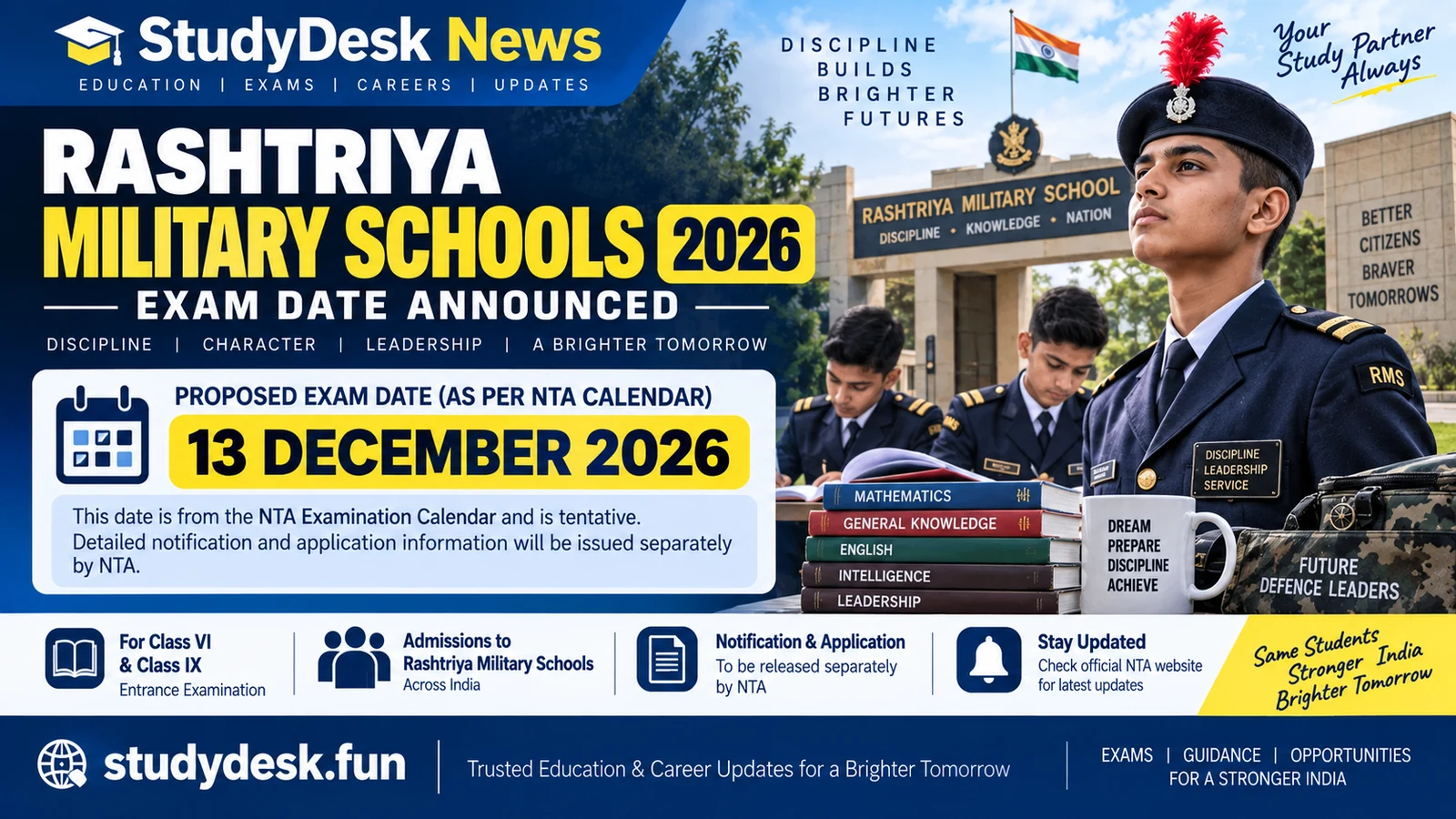
Rashtriya Military Schools entrance-exam date update based on NTA’s official calendar.

NITTT 2027 tentative schedule from the official NTA examination calendar.
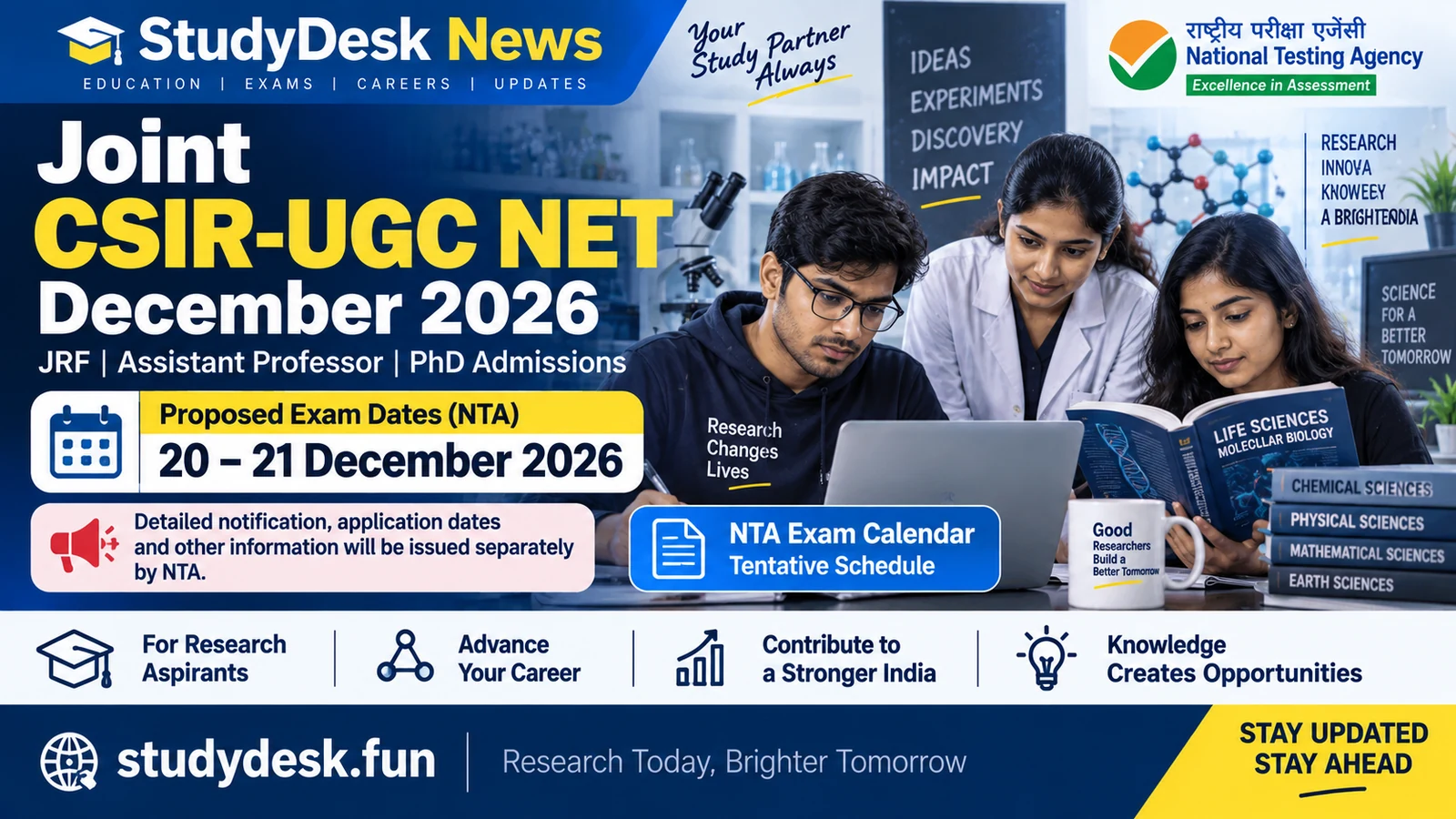
NTA calendar update for Joint CSIR-UGC NET December 2026, with the tentative 20–21 December dates and final-notice caveat.
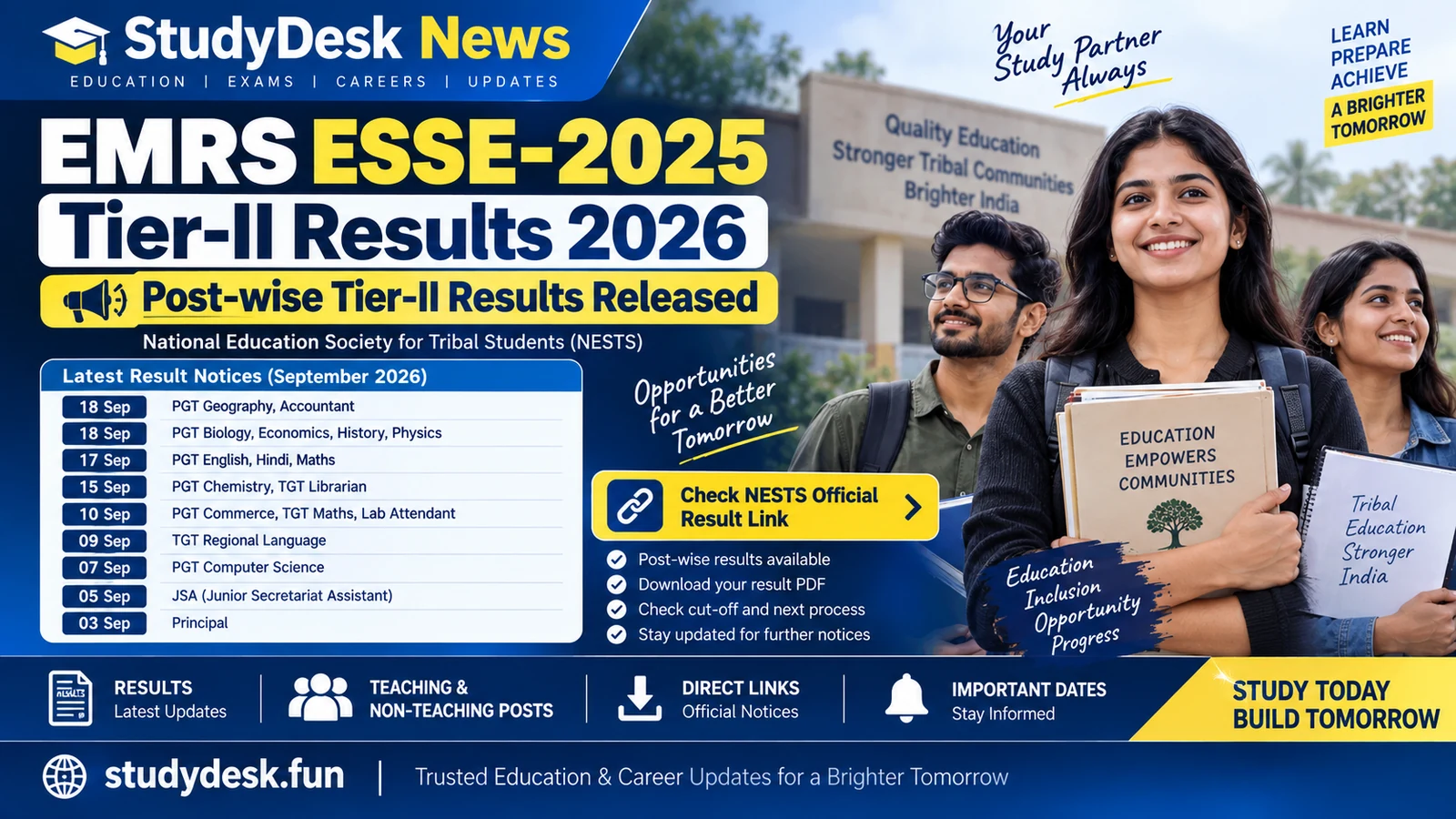
Official NESTS tracker for EMRS ESSE-2025 Tier-II result notices published during September 2026.