 StudyDesk
Primary sources come first
For exam dates and rules, StudyDesk prefers the conducting authority. For boards, it prefers the board itself. For government scholarships, it prefers the ministry, department or official scholarship portal. For private scholarships, it prefers the provider or its official application site.
When secondary sources are acceptable
A current university or institute notice can be useful when a scholarship is distributed through participating institutions. News reports and education portals may help discover an update, but they should not silently replace a primary source for a deadline or eligibility claim.
What a useful citation should support
- The specific date or deadline shown.
- Current open/closed/renewal status.
- Award amount or fee.
- Eligibility, income, marks or institution rules.
- An official change, extension, result or timetable.
What happens when sources conflict
The newest authoritative notice normally controls. If two official pages disagree and the conflict cannot be resolved, StudyDesk should state that the information is unclear rather than choosing the more attractive answer.
External links
Official links are provided so students can verify and apply directly. A link does not mean StudyDesk guarantees the provider, selection outcome or future availability of the programme.
What happens when sources disagree
StudyDesk does not average conflicting dates or copy the version that appears on the most websites. The editorial check starts with the authority that owns the decision: the conducting body for an entrance exam, the board for a board examination, the scholarship provider for an award, or the relevant government portal for a public scheme. A later official notice can supersede an older brochure, so publication date and notice number matter.
When a primary page is temporarily unavailable, a clearly identified institutional copy may be used only as supporting evidence. The page should explain that limitation and be rechecked when the primary source becomes available. Search snippets, social posts, coaching articles and aggregator pages are never enough on their own to turn an expected date into an official fact.
- Prefer the newest applicable official notice over an older information bulletin.
- Keep previous-cycle figures labelled with their year.
- Record the source URL and verification date for time-sensitive claims.
- Correct the canonical page when the authority changes a date or rule.
Sources & verification
This policy describes how StudyDesk prepares, verifies, updates and corrects public exam, board and scholarship information.
Frequently asked questions
How should I use this StudyDesk page?
Use it to understand the current status and next action, then verify the time-sensitive detail on the linked official source before submitting a form, travelling, paying a fee or making an admission decision.

SHRESHTA (NETS) 2027 exam-date tracker based on the official NTA examination calendar.
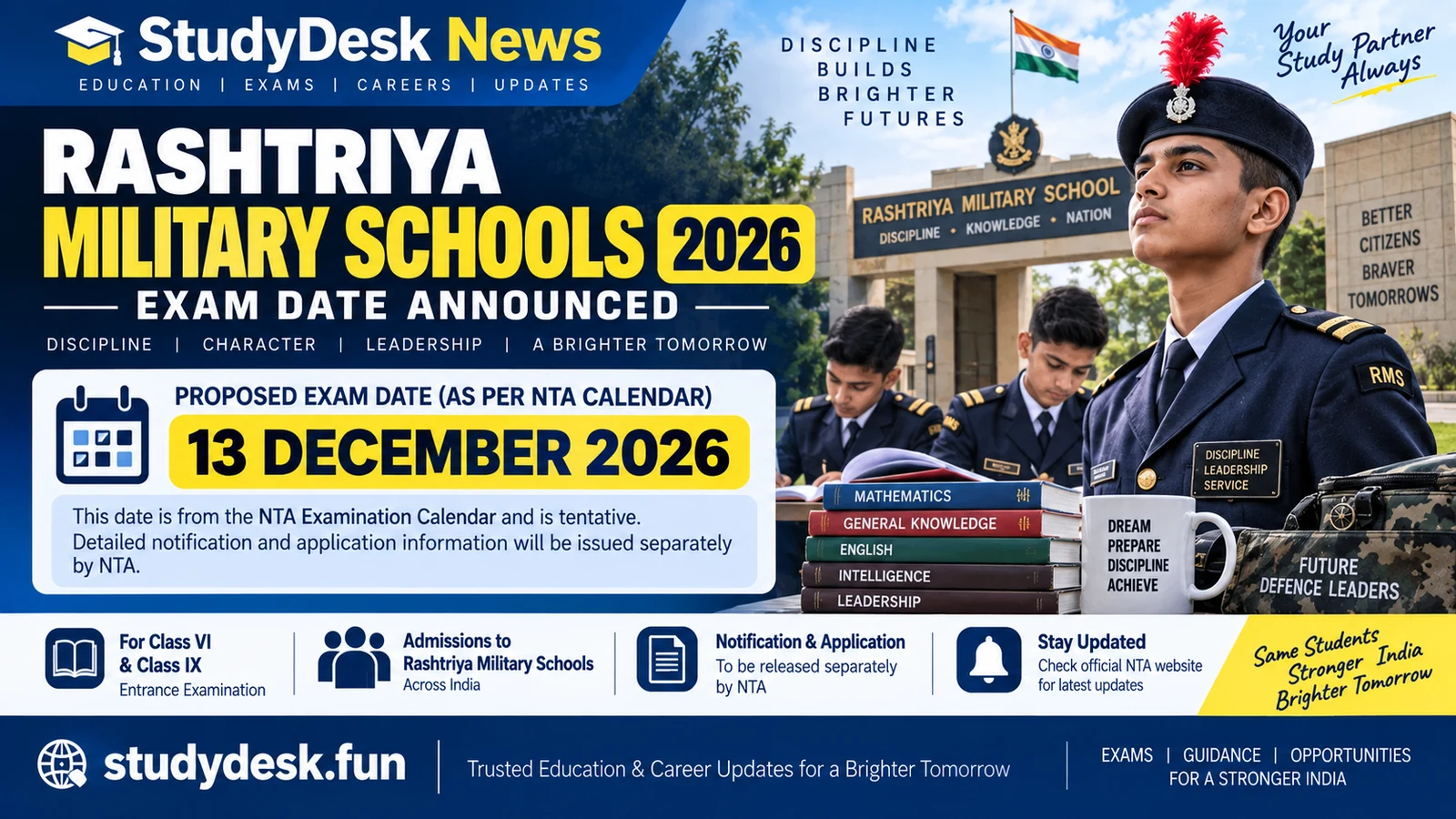
Rashtriya Military Schools entrance-exam date update based on NTA’s official calendar.

NITTT 2027 tentative schedule from the official NTA examination calendar.

NTA calendar update for Joint CSIR-UGC NET December 2026, with the tentative 20–21 December dates and final-notice caveat.
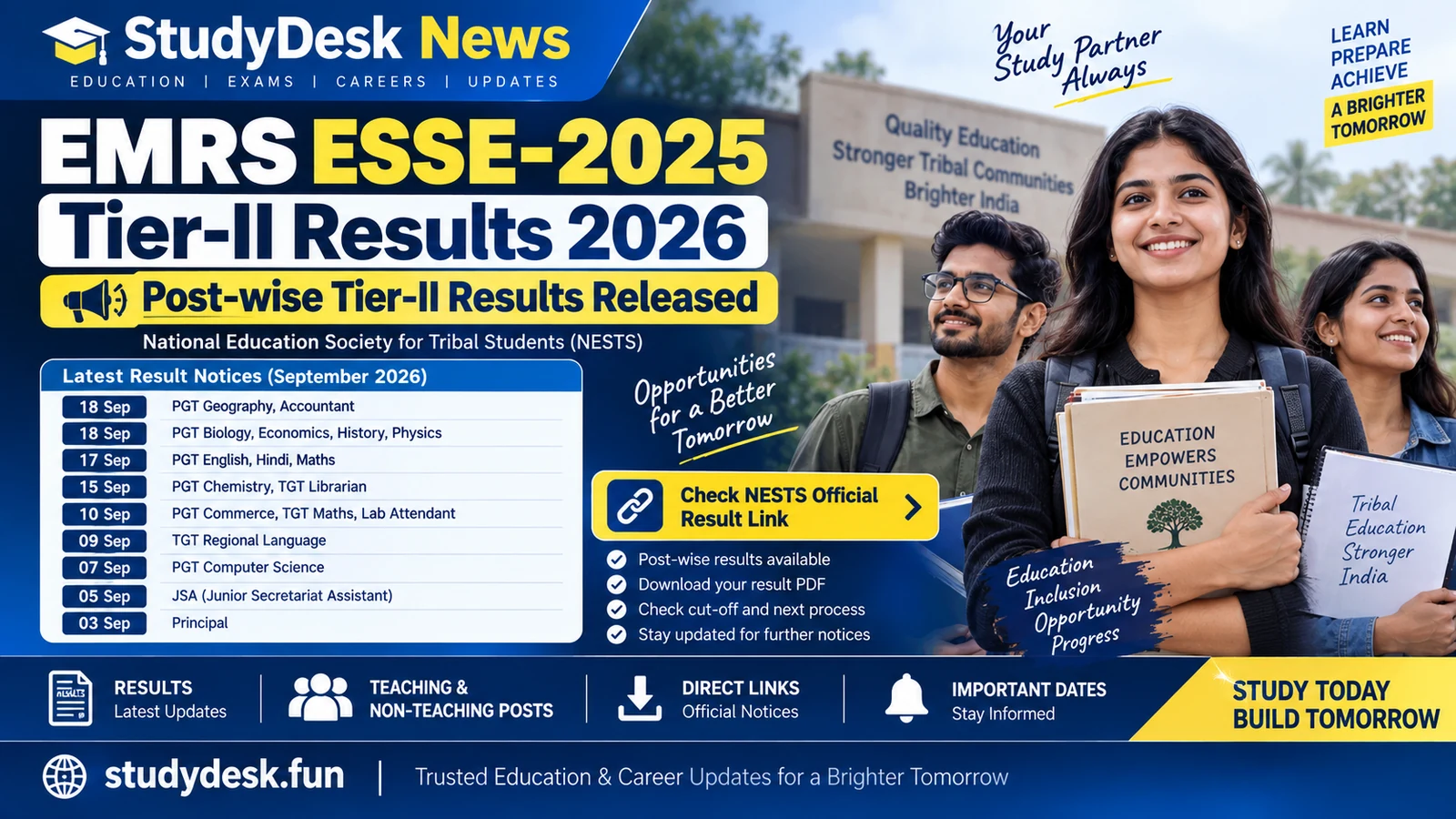
Official NESTS tracker for EMRS ESSE-2025 Tier-II result notices published during September 2026.