 StudyDesk

Eleven days left — and submitting is not the finish line
The National Scholarship Portal closes student applications for the academic year 2026-27 on 31 October 2026. From today, 20 October, that is eleven days. But the date doing quiet damage in most students' plans is not the 31st — it is what comes after it. Your application must also be verified by your institute by 15 November 2026, and then pass L2 verification — district, state or ministry level — by 30 November 2026. An application submitted at midnight on 31 October that your institute cannot verify in time is a submitted application and a lost scholarship at the same time.
So read this article as a chain of three deadlines, not one:
- 31 October 2026 — student application closes on scholarships.gov.in.
- 15 November 2026 — institute (L1) verification closes.
- 30 November 2026 — L2 verification by district/state/ministry closes.
The practical conclusion follows immediately: apply early enough in these eleven days for your institute to act. Institutes verify in batches, nodal officers take leave, and discrepancies bounce applications back for correction. A submission on 22 October gives your institute three working weeks of slack. A submission on 31 October gives it none. The portal opened for this academic year on 1 June 2026; the students who will lose money this cycle are overwhelmingly not the ineligible — they are the last-day filers whose verification chain ran out of calendar.
Who this article is for: every NSP applicant, whatever the scheme
The deadline chain above is portal-wide. It applies whether your scheme is the PM-USP Central Sector Scheme (CSSS), an AICTE scheme such as Pragati, a Top Class scheme, a post-matric scholarship, Ishan Uday for North East students, the NMMSS, or any other scheme hosted on the portal this year. Your deadline is the same; your scheme page differs. Eligibility, award amounts, renewal conditions and document lists are scheme-specific, and the only version of them that counts is the one on your scheme's page and in its guidelines on the portal. This article will not summarise them, because a summary that mixes two schemes' rules is how students talk themselves out of awards they were entitled to.
One rule change is portal-wide and worth knowing precisely, because NSP itself states it: from AY 2026-27, a student may apply for one merit-based scholarship scheme and one or more welfare-based scholarship schemes, as per scheme eligibility. If an older guide told you that one NSP application is all you may ever file, that guide is describing a previous year's framework.
Before you can apply at all: OTR, and the UDID consent
Two gates stand in front of the application form itself, and both have stopped real applications cold this cycle.
One Time Registration (OTR) is mandatory. OTR is a unique 14-digit number allotted to you for your entire academic career on the portal, generated from your Aadhaar or Aadhaar Enrolment ID (EID) with face authentication through the NSP OTR app. No OTR, no application — there is no workaround and no manual alternative. The portal homepage carries two warnings earned from this cycle's failures: if face authentication throws error 904, update the UIDAI Aadhaar FaceRD app from the Play Store; and if face authentication keeps failing, check whether the Aadhaar holder's biometrics are locked — the portal advises checking the lock/unlock status on the mAadhaar app or the My Aadhaar portal, because authentication requires biometrics to be unlocked. Do the OTR today, not on 30 October: it is the step with the most failure modes and the least tolerance for a deadline.
Students with disabilities must complete a step before NSP. As the portal states, all disabled students must first log in on the UDID portal and provide consent to share their UDID details, and only then submit the application on NSP — without that consent, the application cannot be submitted. If this applies to you, it goes to the top of the checklist, above everything else in this article.
If you need help in person, NSP services are available at Common Service Centres, and the total charge for the entire activity per candidate — reference number, biometric authentication, OTR generation and the complete application filing — is fixed at Rs 30, inclusive of taxes. That figure is the portal's own. Anyone charging more for the filing itself is charging you, not the portal.
The final-eleven-days checklist
Work this list in order; it is sequenced so the failure-prone steps come first.
- OTR done?Confirm you hold your 14-digit OTR and can log in. If not, generate it today and solve face-auth problems (FaceRD app update, Aadhaar biometric unlock) while there is still time.
- UDID consent done?If you are a student with a disability, complete the UDID portal consent before touching the NSP form.
- Choose your schemes deliberately.One merit-based scheme plus one or more welfare-based schemes is permitted from 2026-27 — but only ones you are actually eligible for. Read your scheme page's eligibility on the portal, not a summary elsewhere.
- Fill, then verify every field against the document it comes from— name and date of birth against Aadhaar and your marksheets, bank details against the account that will receive the DBT. The portal's own notices flag Aadhaar seeding for DBT through NPCI's Bharat Aadhaar Seeding Enabler; a scholarship approved into an unseeded account is a payment problem waiting for December.
- Submit — then immediately alert your institute.Tell the scholarship nodal teacher or office that your application is in and must be verified before 15 November. Do not assume the system notifies them in a way anyone reads.
- Track the status until it clears L1.If the institute returns the application as defective, the correction is yours to make and resubmit inside the same closing framework — another reason the 31 October submission must not be a 31 October submission.
- Remember L2 closes 30 November.After institute verification, district/state/ministry verification runs to 30 November 2026. You cannot do L2 yourself, but you can keep your documents reachable and your phone number live in case a verifying officer calls.
The one sentence to carry out of this article
The last date is 31 October, but the deadline that should govern your behaviour is earlier: submit while your institute still has comfortable time to verify you before 15 November — which means this week, not next.
Official links
- National Scholarship Portal: https://scholarships.gov.in/
Sources & verification
Frequently asked questions
What is the last date to apply on NSP for 2026-27?
Student applications on the National Scholarship Portal close on 31 October 2026 for the academic year 2026-27.
What are the verification deadlines after applying?
Institute (L1) verification closes on 15 November 2026, and L2 verification by district, state or ministry closes on 30 November 2026. An unverified application does not proceed, however early it was submitted.
Is OTR compulsory for NSP applications?
Yes. The 14-digit One Time Registration number, generated from Aadhaar or Aadhaar Enrolment ID with face authentication, is mandatory — no OTR, no application.
Can I apply for more than one scholarship on NSP in 2026-27?
Yes, within the framework NSP states for AY 2026-27: one merit-based scholarship scheme and one or more welfare-based scholarship schemes, as per each scheme's eligibility.
I am a student with a disability. Is there an extra step?
Yes. You must first log in on the UDID portal and give consent to share your UDID details; only then can you submit your application on NSP.
How much does it cost to file through a Common Service Centre?
The total charge fixed by the portal is Rs 30 per candidate, covering the reference number, biometric authentication, OTR generation and filing of the complete application form.
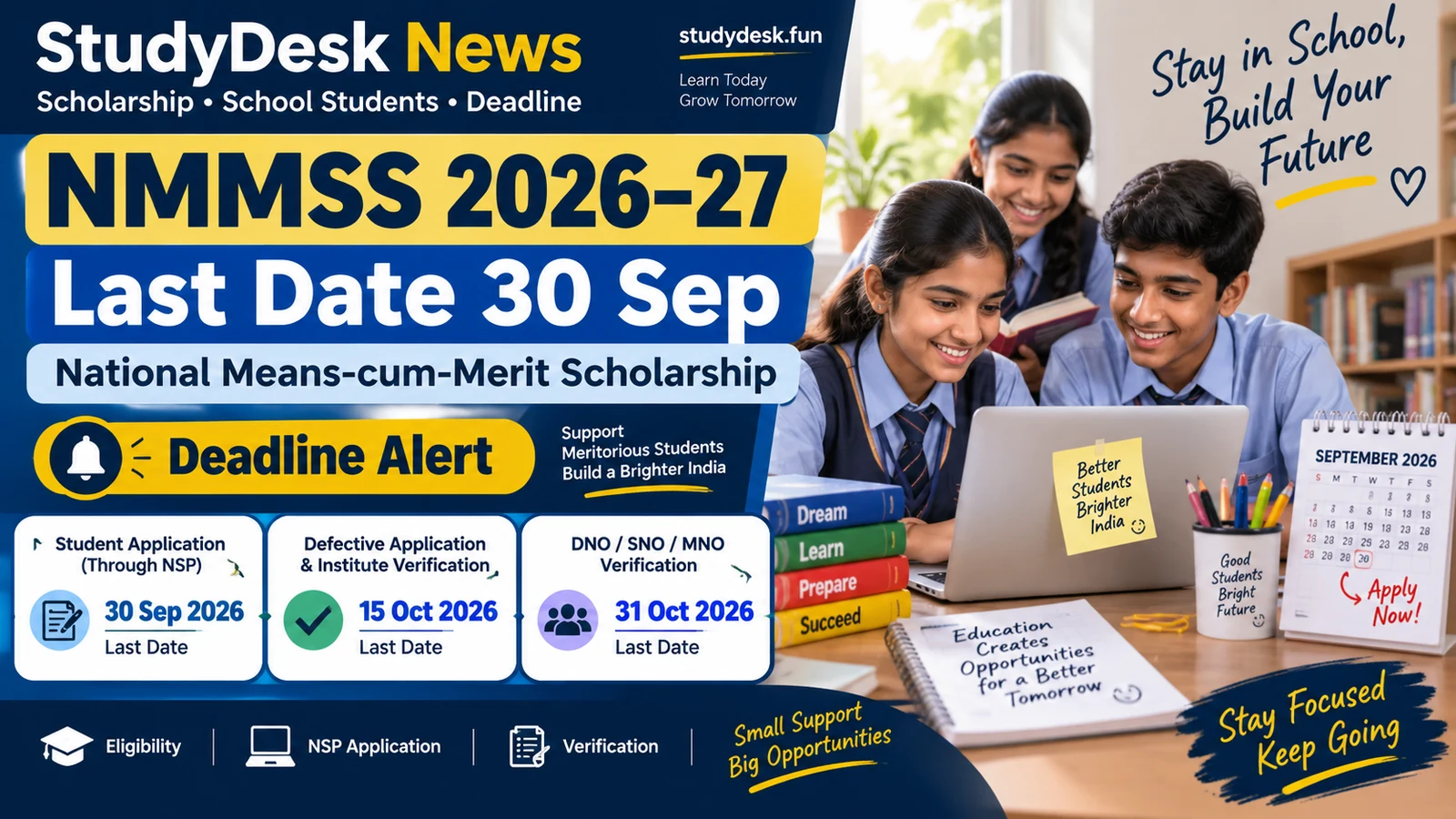
Deadline alert for National Means Cum Merit Scholarship 2026–27 applications on the National Scholarship Portal.

Complete guide to Siemens Scholarship Program 2026-27 (14th edition): eligibility, benefits for all four years, documents and how to apply on siemens.co.in/scholarship.
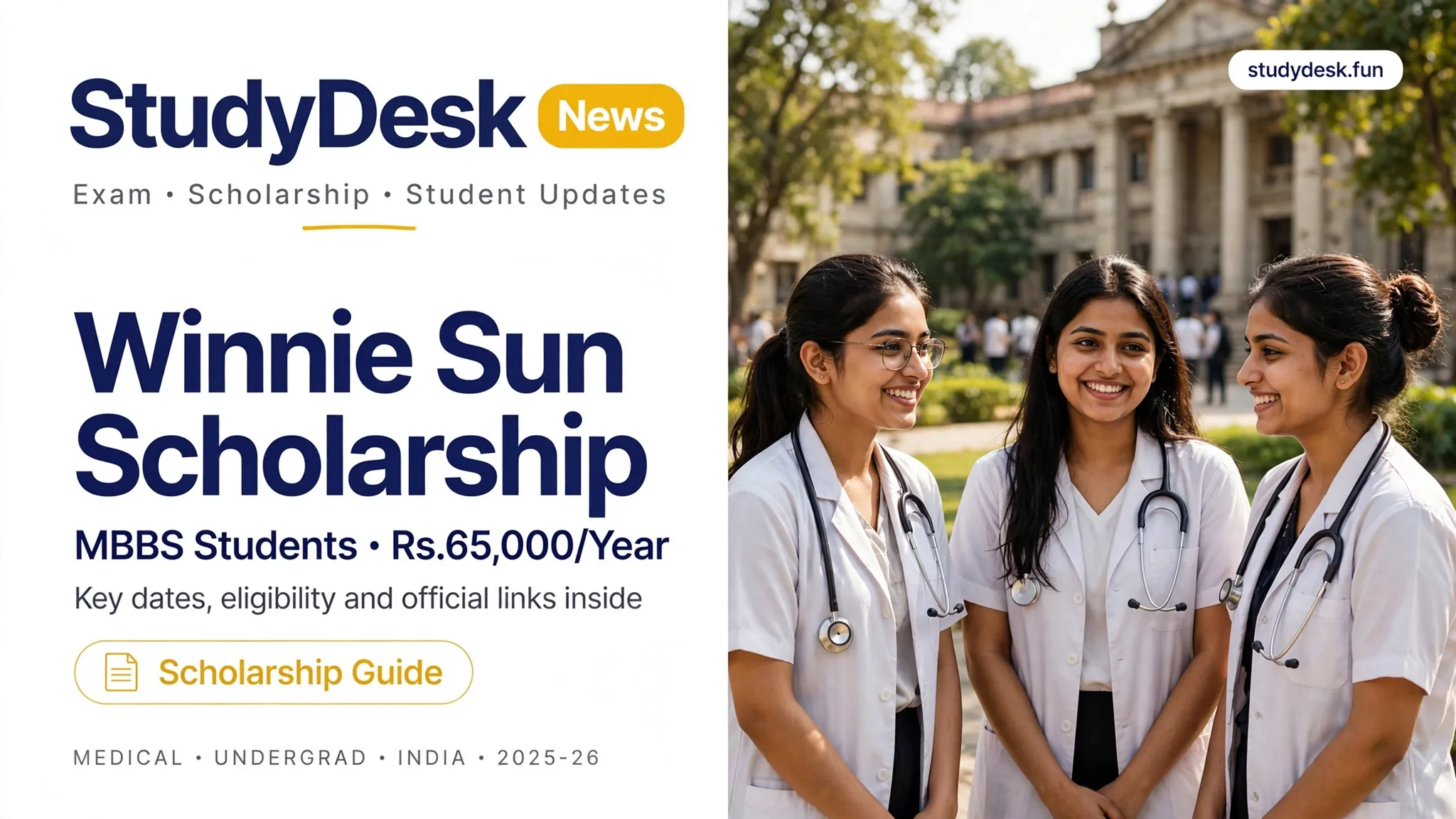
Complete guide to Winnie Sun Scholarship 2026-27: Lotus Petal Foundation support of up to Rs.65,000/year for girl students admitted to MBBS in FY 2026-27, eligibility, selection and how to apply.
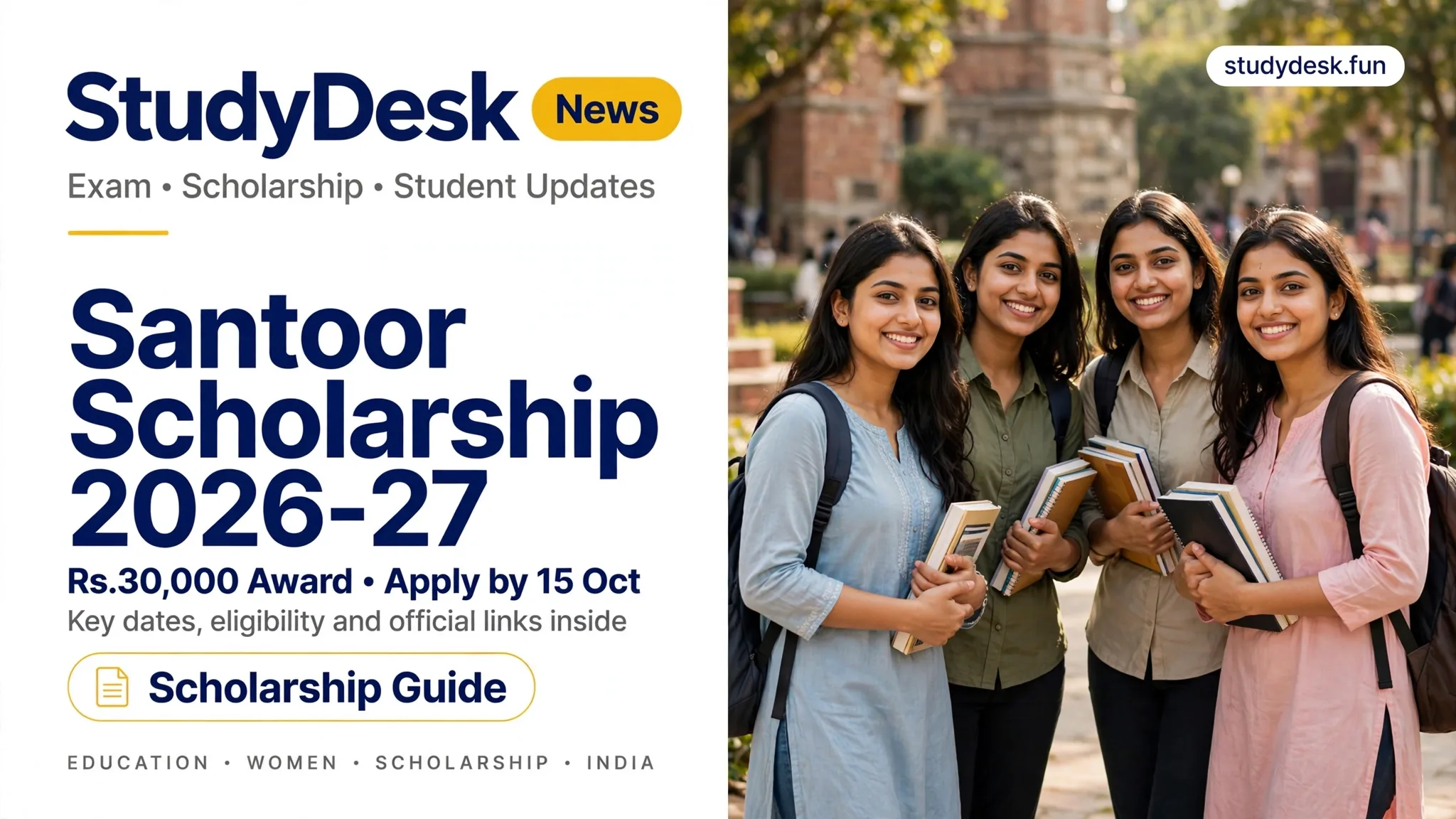
Complete guide to Santoor Scholarship Program 2026-27 by Wipro Consumer Care and Wipro Cares: eligibility for first-year undergraduate girls in Andhra Pradesh and Maharashtra, Rs.30,000 one-time award, and how to apply via santoorscholarships.com.
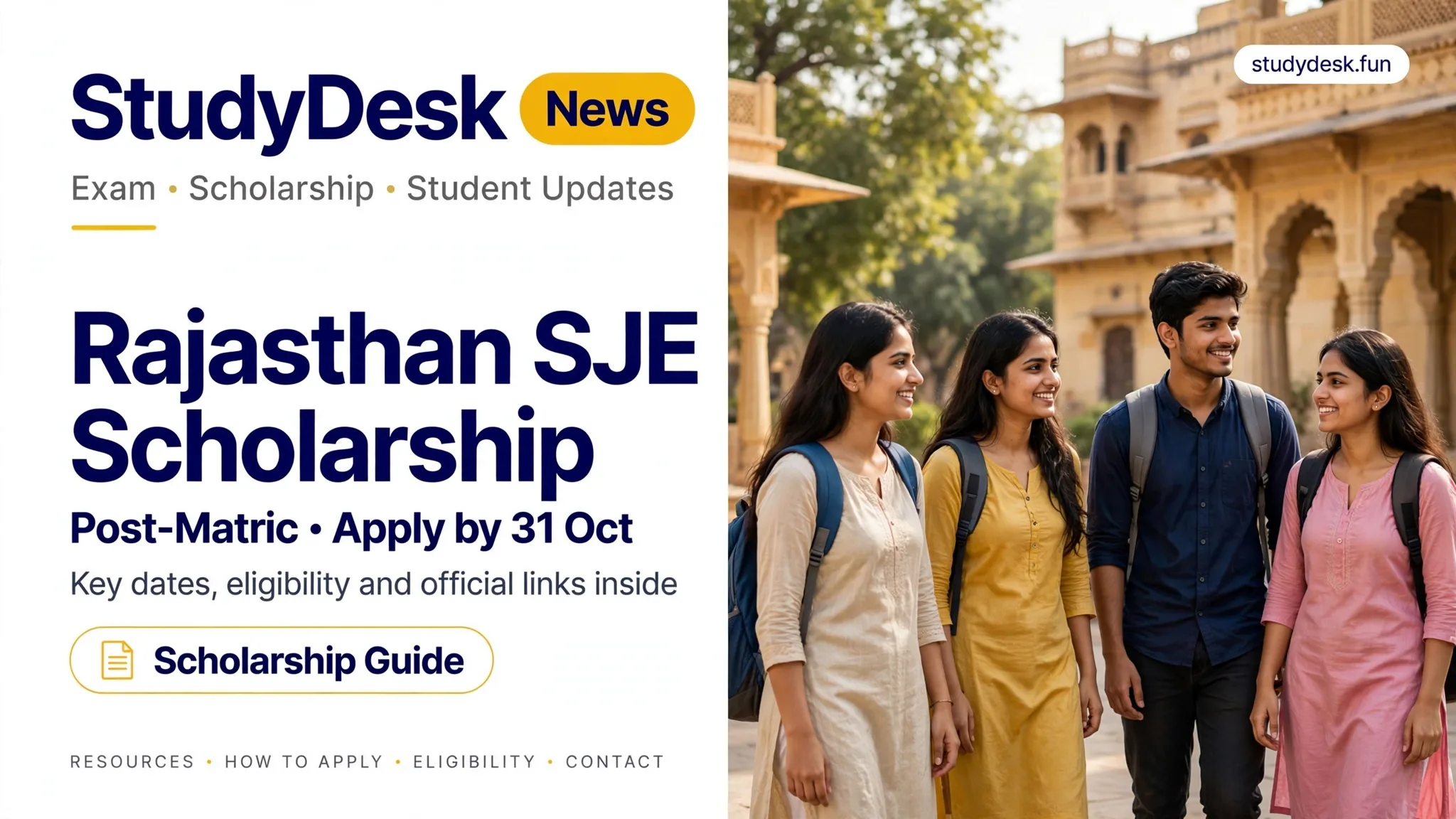
Complete guide to Rajasthan SJE Scholarship 2026-27: Social Justice and Empowerment Department's post-matric schemes (PMS, CM Sarvjan, Dr Ambedkar EBC, SBC), eligibility, documents and how to apply on sje.rajasthan.gov.in.