 StudyDesk

A calendar is a planning instrument, not a news feed
The Staff Selection Commission published its tentative examination calendar for 2026–27 on 8 January 2026, covering examinations from May 2026 to March 2027. Most candidates use it wrongly: they screenshot the table, feel informed, and then prepare exactly as before — one exam at a time, starting when its notification appears. Used properly, the calendar does something more valuable. It shows you the sequence — which exams share a syllabus core, which windows collide, and where the gaps are that make a two-exam or three-exam year realistic instead of heroic.
This page reproduces the calendar faithfully, then does the part the calendar cannot do for you: turning twelve rows into a personal sequence.
The calendar, as SSC published it
| Examination | Advertisement | Applications close | Tentative exam window |
|---|---|---|---|
| JSA / LDC Grade LDCE (DoPT) | 16 March 2026 | 7 April 2026 | May 2026 |
| SSA / UDC Grade LDCE (DoPT) | 16 March 2026 | 7 April 2026 | May 2026 |
| ASO Grade LDCE | 16 March 2026 | 7 April 2026 | May 2026 |
| Combined Graduate Level (CGL) 2026 | March 2026 | April 2026 | May–June 2026 |
| Junior Engineer (JE) 2026 | March 2026 | April 2026 | May–June 2026 |
| Selection Post Phase-XIV | March 2026 | April 2026 | May–July 2026 |
| Combined Higher Secondary Level (CHSL) 2026 | April 2026 | May 2026 | July–September 2026 |
| Stenographer Grade C & D 2026 | April 2026 | May 2026 | August–September 2026 |
| Combined Hindi Translators 2026 | April 2026 | May 2026 | August–September 2026 |
| MTS & Havaldar 2026 | June 2026 | July 2026 | September–November 2026 |
| Sub-Inspector, Delhi Police & CAPFs (CPO) 2026 | May 2026 | June 2026 | October–November 2026 |
| GD Constable 2027 | September 2026 | October 2026 | January–March 2027 |
Three structural facts jump out of the table. First, the three LDCE rows are departmental examinations for serving staff — most open-market candidates should strike them from their planning entirely. Second, the open-market year runs in waves: a graduate wave in May–June (CGL, JE), a 12th-pass wave through the monsoon (CHSL, Stenographer), and a 10th/12th-pass wave in the autumn (MTS, CPO), closing with GD Constable in the new year. Third, every advertisement precedes its exam by roughly two to three months — which is the calendar's quiet warning that preparation starting at notification is preparation started late.
Building your sequence: three worked examples
The graduate (finished degree, full-time aspirant). Anchor: CGL (May–June). Carry-over: the same core serves CHSL if eligible and ambitious for a second shot, and CPO in October–November if the physical standards are within reach. The calendar gives this candidate three genuine attempts in one preparation arc, with the gaps between June and October used for Tier-II depth and physical conditioning respectively.
The Class 12 candidate. Anchor: CHSL (July–September). Supporting attempts: Stenographer if shorthand is a real skill (it cannot be faked or crammed — this is the one exam in the calendar where a missing skill is an absolute bar), then MTS in September–November on the same core at a faster pace. GD Constable in January–March 2027 extends the arc if the age and physical criteria fit.
The Class 10 candidate. Anchor: MTS (September–November) and GD Constable (January–March 2027). These two share the core at the most accessible level, and GD adds the physical stages — so this candidate's calendar year has a study track and a fitness track running in parallel from the start, not a fitness panic in December.
What the calendar cannot tell you
The calendar is tentative by its own title. Individual notifications move windows, split tiers across months the calendar did not predict, and occasionally slip a cycle. It also says nothing about vacancies, cut-offs or results — the three things candidates most want from it. Use it for the one job it does well: sequencing. Then let each exam's notification, when it appears on ssc.gov.in, replace the calendar row for that exam entirely.
And a caution about copies of the calendar circulating online: reproductions already in circulation contain copying errors — a GD window stretched to "Jan–Nov 2027", a CGL window described in one summary as September against the table's own May–June. When a date matters, check the calendar PDF or the exam notification on the official site, not a screenshot of a screenshot.
From October 2026, the live part of this calendar is its tail: CPO's October–November window, and GD Constable's January–March 2027 examination following its autumn application window. If your sequence includes either, the calendar has already told you the only thing you need to know — the time to be ready is measured from now, not from the notification.
Sources & verification
Frequently asked questions
When did SSC publish the 2026-27 calendar and what period does it cover?
The Staff Selection Commission published its tentative examination calendar for 2026–27 on 8 January 2026, covering examinations from May 2026 to March 2027.
Are the calendar dates final?
No. The calendar is tentative by its own title, and the notification for each exam overrides the calendar. When a notification appears on ssc.gov.in, it replaces the calendar row for that exam entirely.
What sequence does the calendar suggest for a Class 10 candidate?
The worked example in this article anchors on MTS & Havaldar 2026 (applications June–July 2026, exam September–November 2026) and GD Constable 2027 (advertisement September 2026, applications closing October 2026, exam January–March 2027), with a study track and a fitness track running in parallel.
What sequence does the calendar suggest for a graduate?
The worked example anchors on CGL 2026 (advertisement March 2026, applications closing April 2026, exam May–June 2026), with the same core carrying over to CHSL if eligible and to CPO in October–November 2026 if the physical standards are within reach.
Who are the LDCE rows in the calendar for?
The three LDCE rows — JSA / LDC, SSA / UDC and ASO Grade LDCE, all advertised on 16 March 2026 with applications closing 7 April 2026 — are departmental examinations for serving staff, and most open-market candidates should strike them from their planning entirely.
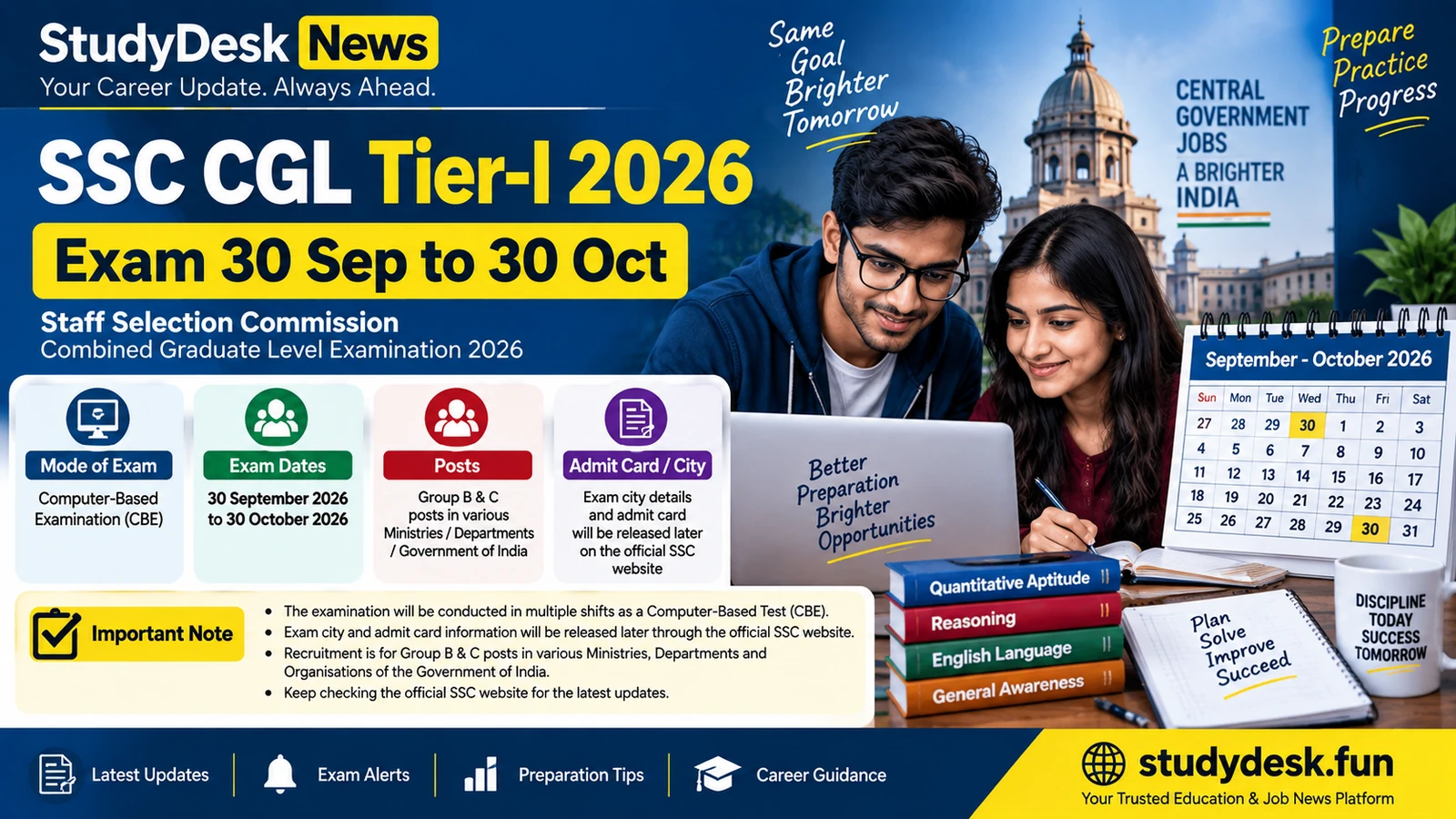
Current SSC CGL 2026 Tier-I exam-window, admit-card and city-information tracker.

Official NTA examination calendar published 16 September 2026 with tentative dates through March 2027.
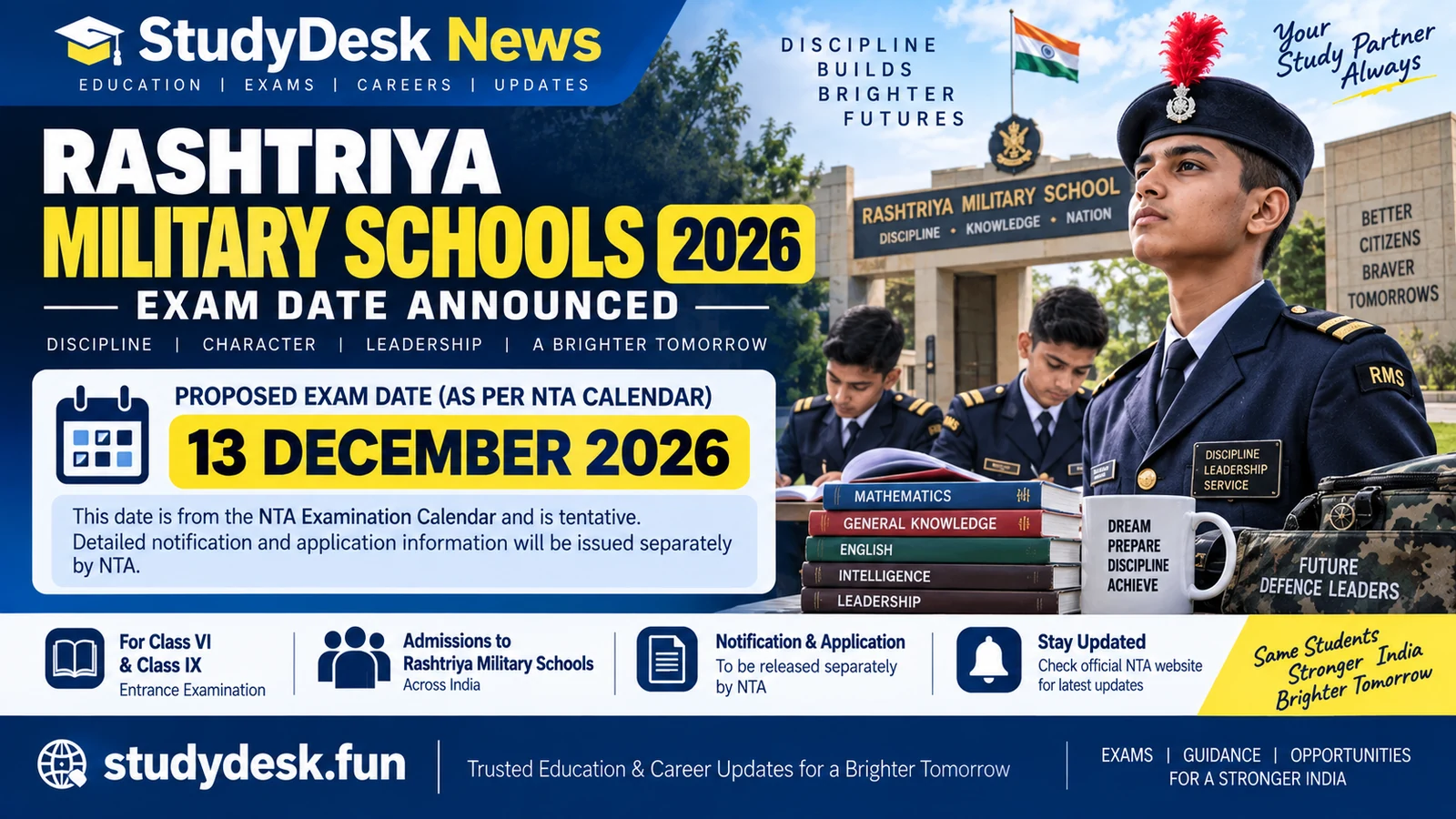
Rashtriya Military Schools entrance-exam date update based on NTA’s official calendar.

SSC Junior Engineer 2026 application closure, disciplines and tentative exam-period update.
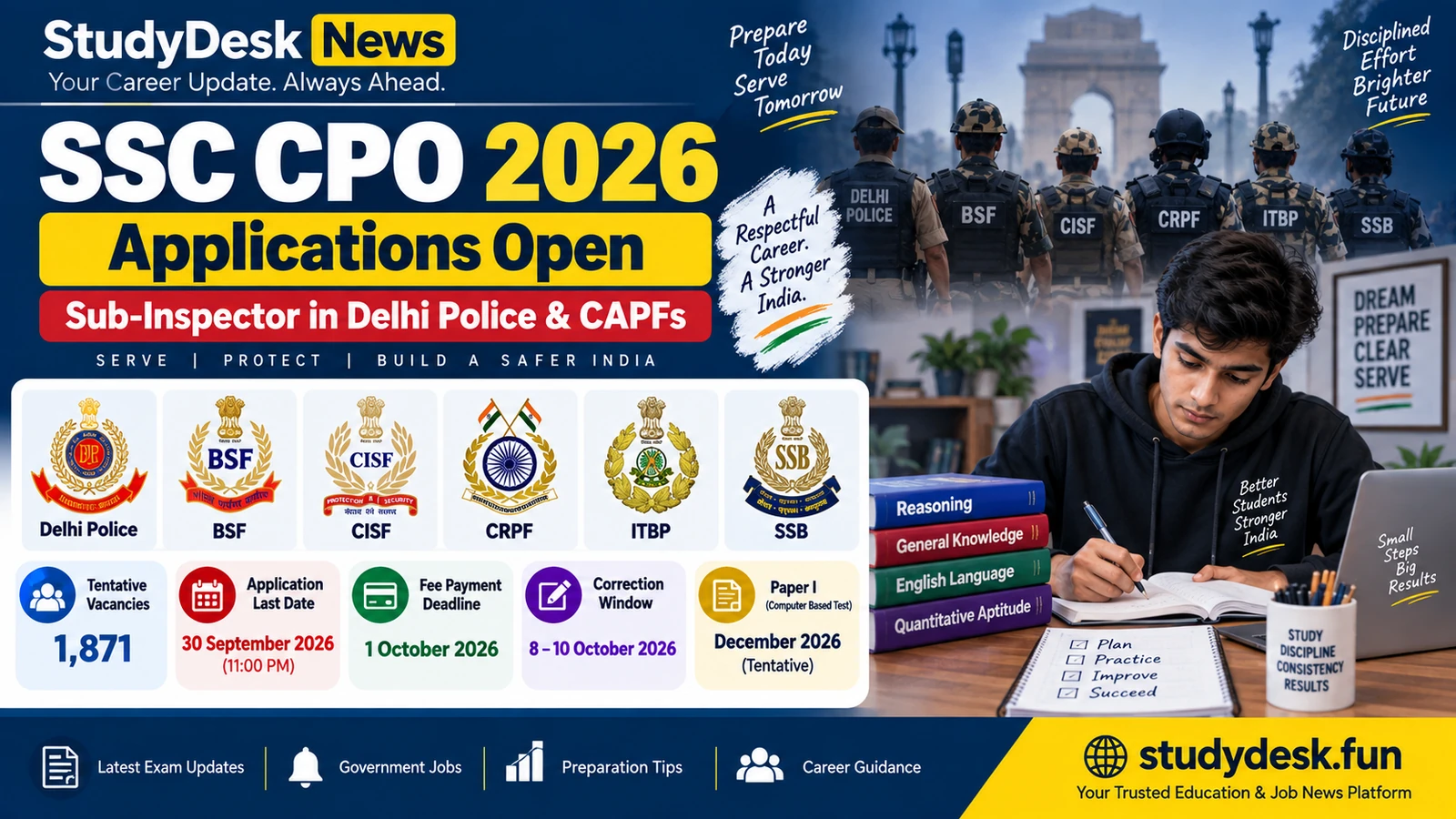
SSC CPO 2026 application closure, correction window and Paper-I schedule update.